I received a QHY Minicam8 camera for testing and review purposes, courtesy of QHYCCD.
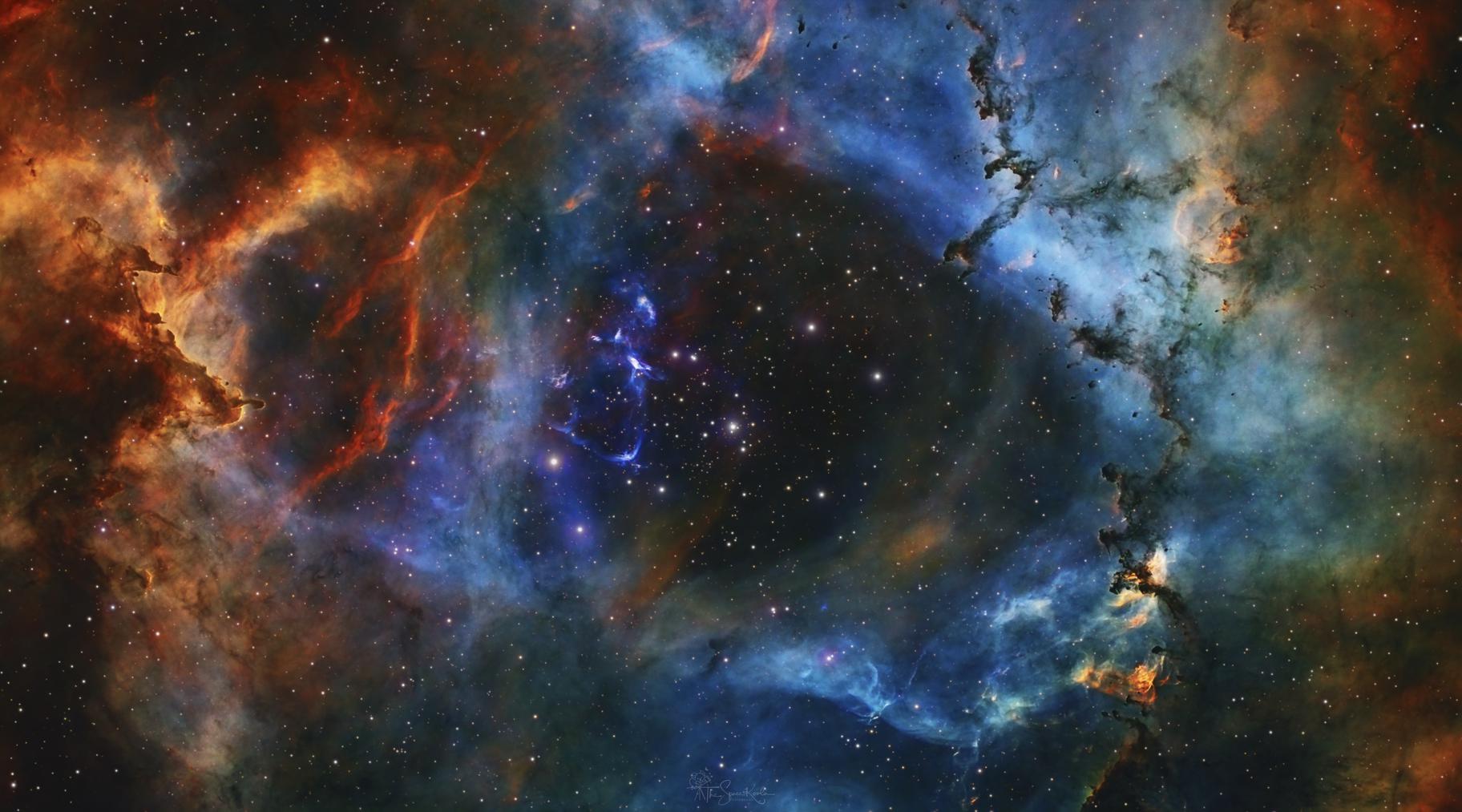
One of the test images was going to be a classic Hubble Palette photo. As I don't like capturing the entire nebula when imaging in this palette, I decided to go for a slightly longer focus and captured the center of the Rosette Nebula.
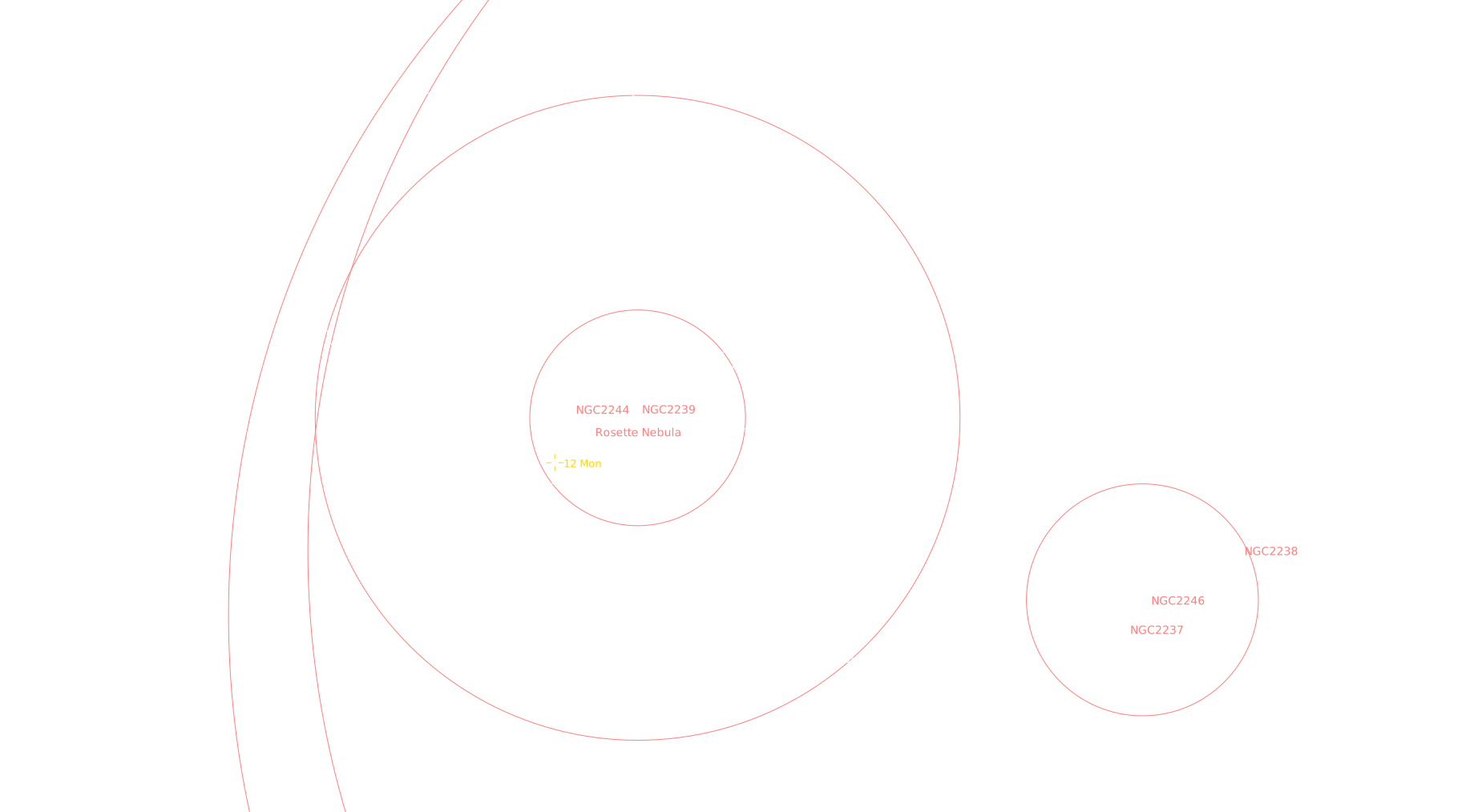
The Rosette Nebula (NGC 2237) is an emission nebula located in the constellation Monoceros, about 5,000 light-years away. Its distinct circular shape is formed by a central cluster of young stars, NGC 2244, which emits intense radiation, carving out the surrounding gas and dust. This process creates the bright ridges and intricate structures visible in the nebula.
The nebula is primarily composed of hydrogen gas, with ionized regions glowing bright due to the energy from the embedded stars. Surrounding the brighter areas are fainter extensions of gas and dust that blend into the interstellar medium.
The Rosette Nebula spans about 130 light-years across, making it one of the larger nebulae visible to amateur astronomers, and it’s a stunning example of how young stars shape their environment.
 The Space Koala Astrophotography by Luca Bartek